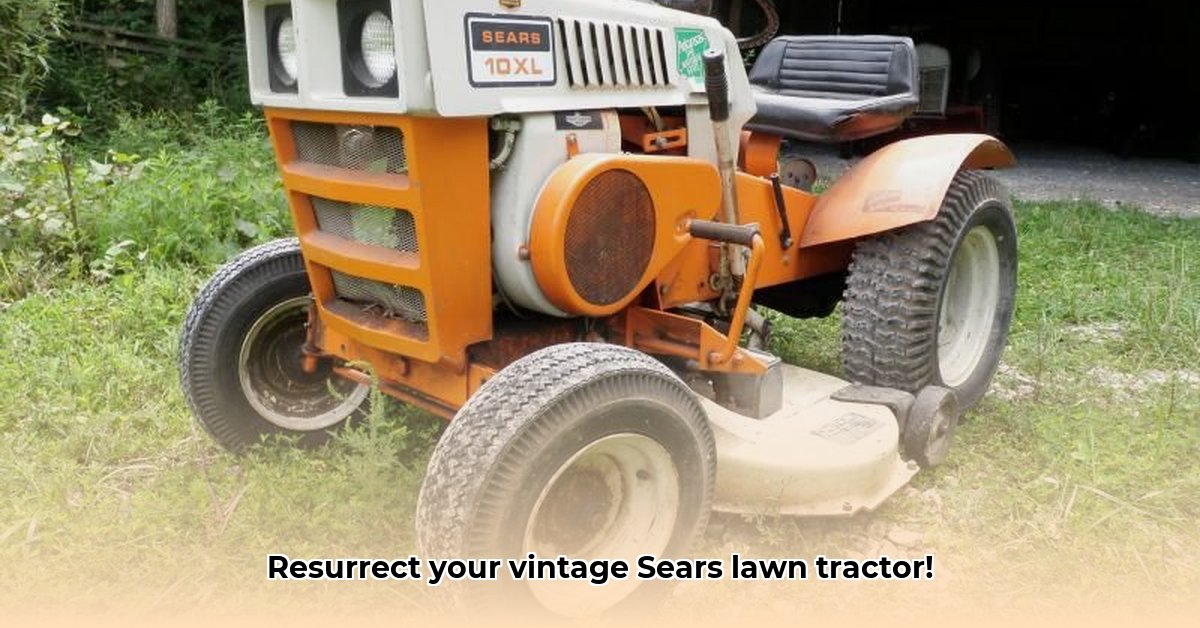
Your 1970 Sears Craftsman lawn tractor represents a bygone era of robust engineering. These machines, known for their surprising longevity, can still provide years of reliable service with proper care and maintenance. This comprehensive guide provides actionable advice for troubleshooting common problems, performing preventative maintenance, and sourcing essential parts, transforming your vintage tractor from a potential headache into a cherished and functional piece of history. For more on vintage tractors, check out this useful resource on other vintage tractors.
Conquering Common 1970 Sears Tractor Troubles
Many owners of these vintage machines report similar issues. Let's tackle some of the most frequent problems:
Magneto Malfunctions: Getting Your Spark Back
A common problem is a failing magneto (the component that generates the spark for ignition). Before assuming it's the magneto, however, check the following:
Spark Plug Inspection: A fouled or loose spark plug can mimic a magneto issue. Carefully inspect the plug; clean or replace as needed. (A fouled plug is one with carbon buildup that prevents sparking).
Spark Test: Use a spark tester (available at auto parts stores) to check if a spark is reaching the plug. No spark? The magneto is a prime suspect. (A spark tester is a simple tool that allows you to visually confirm if your spark plug is receiving a spark).
Magneto Coil Replacement: Finding original Sears parts can be challenging. Consider aftermarket magneto coils designed for similar engines, which may require minor adaptation. (This involves fitting a coil from a different manufacturer that is mechanically similar).
Online Community Resources: Online forums dedicated to vintage tractors are invaluable resources for troubleshooting and parts sourcing. Many owners share experiences and solutions. (These forums are often highly active and offer detailed knowledge on older tractor models).
Carburetor Issues: Fine-Tuning Fuel Delivery
A dirty or misadjusted carburetor can lead to poor engine performance. (The carburetor mixes air and fuel for combustion).
Carburetor Cleaning: Carefully disassemble and thoroughly clean the carburetor using carburetor cleaner. (Carburetor cleaner is a specialized solvent designed to dissolve fuel deposits).
Adjustment: Refer to your owner's manual for proper carburetor adjustments. (This involves adjusting screws to regulate the air-fuel mixture). Improper adjustment can lead to poor engine performance or damage.
Worn Belts: Ensuring Smooth Operation
Worn belts can cause slipping and loss of power. (Belts transmit power from the engine to various components).
Belt Inspection: Regularly inspect the drive belts for wear and tear; replace them as necessary. (Worn belts exhibit fraying, cracks, or excessive stretching).
Replacement: Choosing the correct size and type of replacement belt is critical. (Always reference your owner's manual to ensure the correct specification).
Preventative Maintenance: Extending Your Tractor's Lifespan
Proactive maintenance is key to keeping your 1970 Sears Craftsman running smoothly. Here's a preventative maintenance checklist:
Oil Changes: Follow the oil change schedule in your owner's manual. Using the correct oil viscosity is essential for engine longevity. (Oil viscosity is a measure of its thickness).
Air Filter Cleaning: Clean or replace the air filter regularly. (A clogged air filter restricts airflow, impacting engine performance).
Blade Sharpening: Sharp blades are crucial for efficient mowing and prevent strain on the engine. (Regular blade sharpening ensures clean cuts and protects against damage).
Battery Care (If Applicable): Keep the battery terminals clean and free of corrosion. (Corrosion reduces electrical conductivity, hindering starting).
Parts Sourcing Strategies: Your Guide to Finding Parts
Locating parts for a 50+ year-old tractor requires a multi-pronged approach:
Online Forums: Connect with other owners on online forums dedicated to vintage tractors. (These communities often have extensive knowledge of parts availability and suitable substitutes).
Specialized Vintage Parts Suppliers: Several online retailers and brick-and-mortar stores specialize in supplying parts for older equipment. (These suppliers often have a deep inventory of hard-to-find parts).
eBay and Craigslist: These online marketplaces can sometimes yield surprising results. (Patience and persistence are key when searching on these platforms).
Local Tractor Repair Shops: Local shops may have used parts or know where to find them. (Networking locally can be essential for finding hard-to-locate parts).
3D Printing: For certain non-critical components, 3D printing offers a viable solution, though this requires design expertise and access to a 3D printer. (3D printing provides a way to fabricate custom replacements for certain components).
Advanced Repair Techniques (Optional): Magneto Overhaul
Overhauling a magneto requires electrical expertise and should only be attempted by those comfortable working with electrical systems. (Improper handling can cause injury or further damage). If you lack the expertise, seek professional help.
Key Takeaways and Next Steps
Maintaining a 1970 Sears Craftsman lawn tractor is achievable with a combination of proactive maintenance and careful parts sourcing. Regular checkups, prompt attention to minor problems, and engagement with the online community will help your vintage machine continue providing years of dependable service. Remember to always consult your owner's manual and prioritize safety. Join online forums and share your experiences – your knowledge could help another vintage tractor enthusiast!